Energy & Digital Markets
Ongoing research on the economics of energy and digital markets — examining how market structure, regulation, and policy shape outcomes in these sectors — with Professors Hunt Allcott and Omer Karaduman.
Pre-doctoral Research Fellow, Stanford Institute for Economic Policy Research (SIEPR)
robert.leung@stanford.edu · rnrleung@gmail.com · Curriculum Vitae
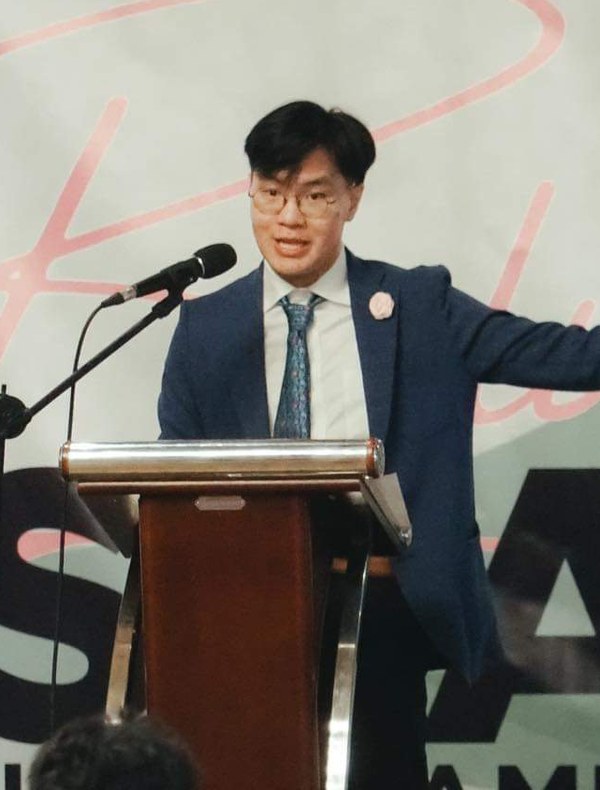
I am a pre-doctoral research fellow at the Stanford Institute for Economic Policy Research (SIEPR), where I study the economics of energy and digital markets under Professors Hunt Allcott and Omer Karaduman. My research broadly tackles questions of market design, regulation, and public policy. Most people know me as Tobi.
Before Stanford, I completed my MSc in Econometrics and Mathematical Economics (EME) at the London School of Economics and a BS in Applied Mathematics at the Ateneo de Manila University. Outside of work, I spent my university years in competitive debating (winning the 2023 World Championship) — and now coach the wonderful, rambunctious children of WSDC Philippines.
Ongoing research on the economics of energy and digital markets — examining how market structure, regulation, and policy shape outcomes in these sectors — with Professors Hunt Allcott and Omer Karaduman.
I study whether dynastic succession preserves government–supplier relationships, using Philippine mayoral elections and public procurement records. When a relative of the outgoing mayor narrowly wins an open seat, the predecessor's suppliers are far more likely to survive and keep their share of procurement, a persistence that does not appear under unrelated same-party succession.
I examine whether targeted disaster-response policies can themselves signal future risk, using wildfire insurance moratoria in California. Moratorium designations lead to large and persistent declines in home values, even in areas outside fire perimeters, which indicates that the designation itself, rather than physical damage alone, drives the decline.
We introduce a network-based framework for measuring political kinship structures, reconstructing co-incumbency kinship networks among Philippine local officials across nine election cycles (2001–2025). Greater dynastic concentration is associated with dimmer night-time lights, weaker own-source revenue, and lower local-government competitiveness.
The largest open-source dataset of Philippine national and local election results: every winning candidate since 2001, about 140,000 across eight cycles, plus candidate-level vote counts back to 2007. Non-partisan and independent, it grew out of my undergraduate thesis on political dynasties and is fully reproducible from the raw COMELEC scrapes.